A useful ad creative brief should let a designer start work without opening Slack to ask what the ad is supposed to say.
That sounds obvious. Yet plenty of briefs contain a product link, "make it scroll-stopping," and six screenshots with no explanation. The designer has to invent the strategy, then gets blamed when the first draft misses it.
The template below is built for Meta static ads. It is short enough to use every week and specific enough to support a real creative test.
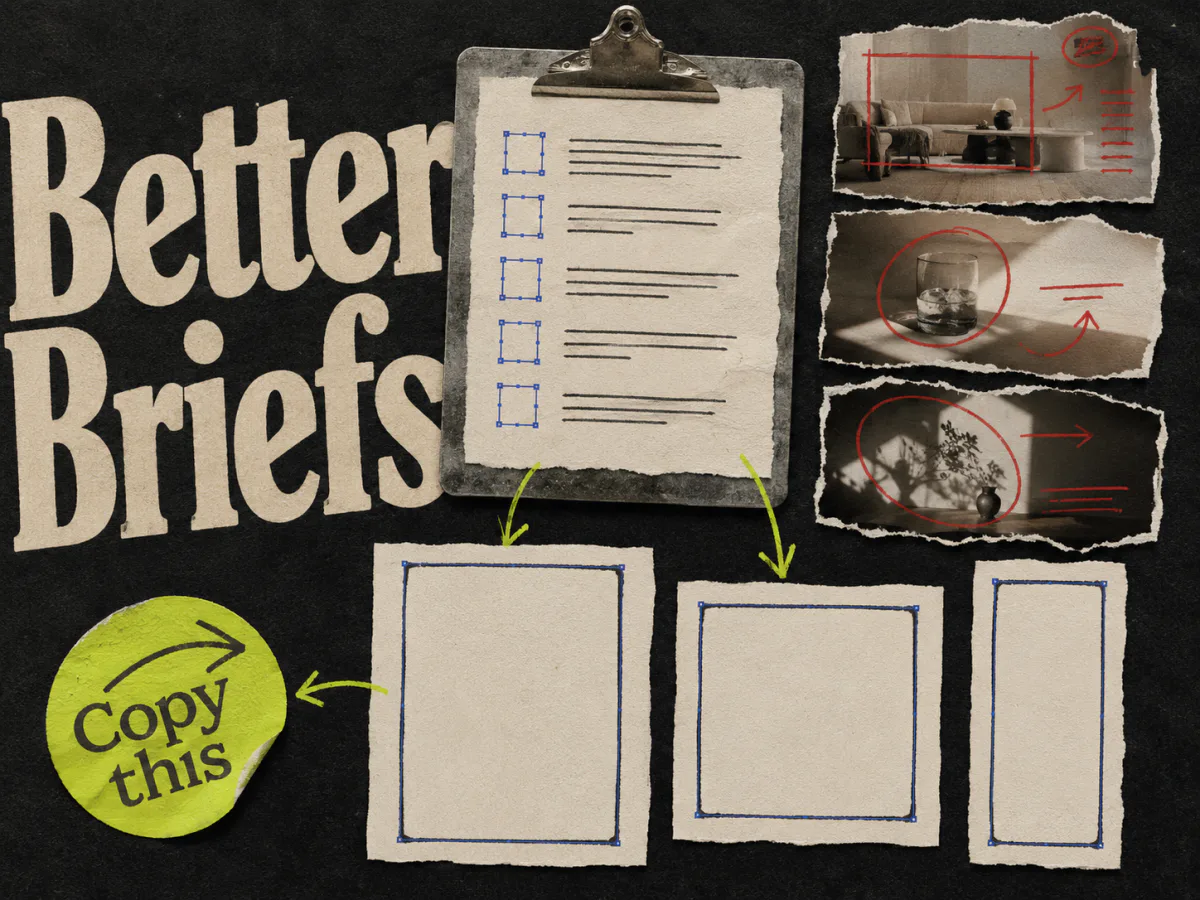
Copy this ad creative brief template
Campaign
- Product:
- Campaign or launch:
- Objective:
- Conversion event:
- Audience:
- Placement and sizes:
- Due date:
- Owner:
Test
- Hypothesis:
- Angle:
- Variable being tested:
- What must stay the same:
- Number of variants:
- Success metric:
- Decision date:
Message
- Customer problem:
- Desired outcome:
- Main hook:
- Supporting proof:
- Offer:
- CTA:
- Claims that are approved:
- Claims or wording to avoid:
Visual direction
- Concept:
- Product treatment:
- Reference ads:
- Brand requirements:
- Required logo or CTA treatment:
- Required disclaimers:
- What should feel different from previous ads:
Deliverables
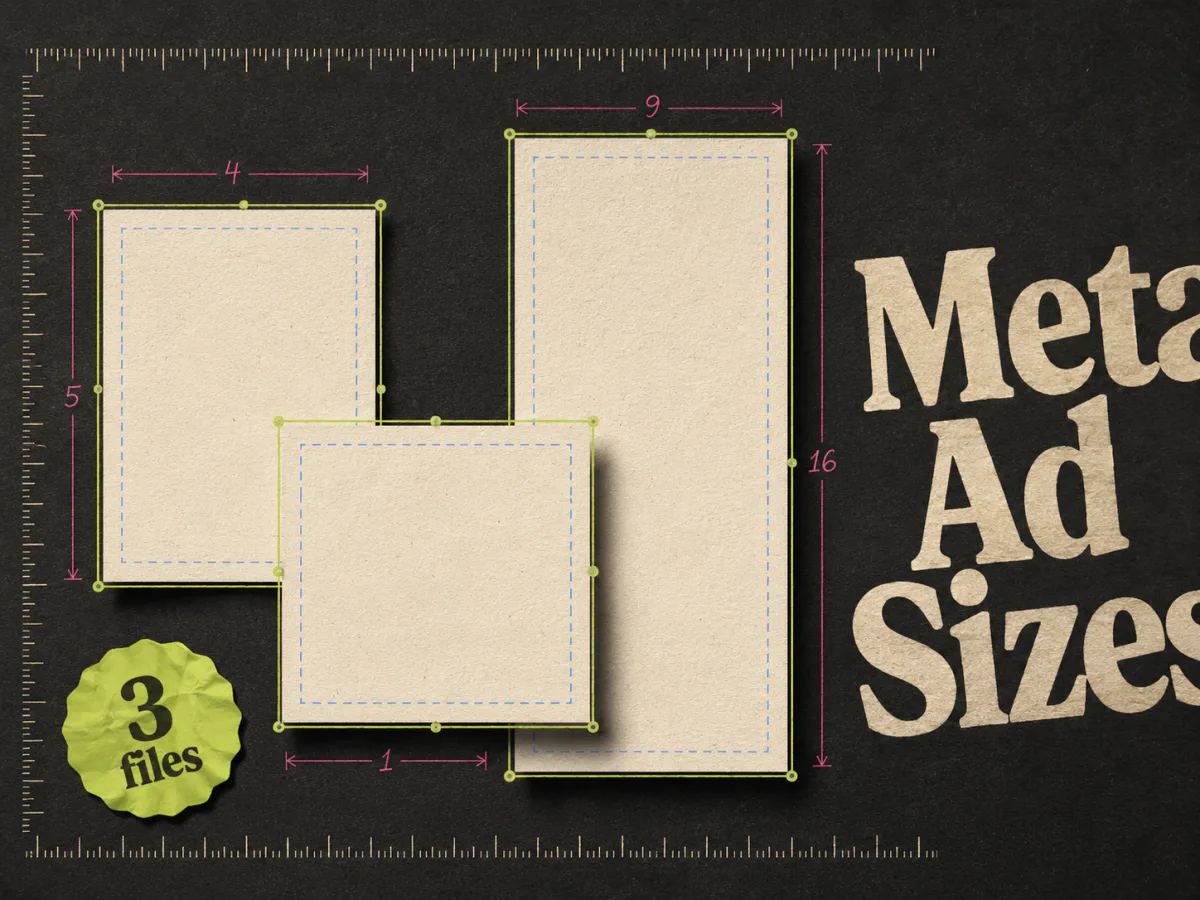
- 4:5 Feed:
- 1:1 square:
- 9:16 Stories and Reels:
- File type:
- Source file:
- Naming convention:
That is the whole brief. If a section does not apply, delete it. Do not add five pages of brand history because the template looks too short.
What each section is for
Campaign
This is the basic context. The objective and conversion event matter because an awareness ad and a purchase ad should not carry the same amount of explanation.
Audience should describe a recognizable group with a real situation:
In-house Meta media buyers managing at least three brands who still brief static ads manually.
"Marketers aged 25 to 45" does not help the writer or designer.
List the placements and sizes before creative starts. A layout built only at 1:1 may need a full rethink when someone asks for 9:16 an hour before launch.
Test
This is the part most briefs miss.
The hypothesis says what you expect to learn:
A time-saving angle will outperform a generic AI angle because the audience already understands AI generation but feels the production bottleneck every week.
The variable says what changes between ads. The control says what stays stable.
If the hook, offer, image, CTA, and landing page all change, you have a batch of ads. You do not have a clean test.
Message
The angle is the argument. The hook is how you open it. Proof gives the claim a reason to be believed.
Keep them separate:
- Angle: save time producing static ad variants
- Hook: "Your designer is still on version two"
- Proof: generate several editable formats from one approved concept
This makes revision easier. A weak hook can change without throwing away the whole angle.
Approved and prohibited claims deserve their own lines. This matters in beauty, supplements, finance, and any category where a casual rewrite can create a compliance problem.
Visual direction
References need notes.
Bad:
Make it like these.
Useful:
Use the chat screenshot from reference one to make the delay visible. Borrow the left-to-right reading order from reference two. Do not copy either brand's colors, wording, or product composition.
The designer now knows which structural ideas matter.
"What should feel different" is useful when the account has ten ads built from the same template. Name the pattern you are trying to escape.
Deliverables
Specify ratios, file types, and source-file expectations. If the team needs editable output, say so. If a designer delivers flattened JPGs and the media buyer expected editable files, the brief failed before the design did.
Use a naming convention that survives Ads Manager:
For example:
The name tells you what you are looking at when twenty ads appear in a report.
A filled brief for a Meta static ad
Here is the same template with actual decisions.
Campaign
- Product: Adrio
- Campaign: evergreen acquisition
- Objective: trial signup
- Conversion event: completed signup
- Audience: in-house media buyers and small agency teams producing Meta static ads every week
- Placement and sizes: 4:5, 1:1, and 9:16
- Due date: Friday
- Owner: paid social lead
Test
- Hypothesis: the production-delay angle will beat generic AI generation because the audience already uses AI but still waits on design revisions
- Angle: ship approved static variants before the designer's next revision
- Variable being tested: hook
- What must stay the same: angle, product proof, offer, CTA, and base layout
- Number of variants: four
- Success metric: qualified signup CPA, with CTR as an early read
- Decision date: after each variant has enough spend for a useful comparison
Message
- Customer problem: static ad production is slower than the media-buying cycle
- Desired outcome: launch several editable variants on the day the idea is approved
- Hook options:
- "Your designer is still on version two"
- "The test is ready. The ads are not."
- "Still waiting two days for four statics?"
- "Research on Monday. Launch on Monday."
- Supporting proof: competitor research, editable generation, and three Meta ratios in one workflow
- Offer: start a trial
- CTA: build your first batch
- Approved claim: export 1:1, 4:5, and 9:16 static ads
- Avoid: guaranteed performance claims or made-up production savings
Visual direction
- Concept: a chat conversation where the designer says the next revision arrives tomorrow while the Adrio side has already launched several variants
- Product treatment: show the editor or exported ads, not a generic AI sparkle
- Reference ads: use the chat structure for reading order only
- Brand requirements: Adrio type, colors, and CTA treatment
- Required logo or CTA treatment: standard shared overlay renderer
- What should feel different: avoid the current dark collage style; make the delay feel like a real work conversation
Deliverables
- 4:5 Feed
- 1:1 square
- 9:16 Stories and Reels
- PNG exports and editable source
- Four hook variants in all ratios
Someone can make the ads from this brief. They may still have creative questions, which is healthy. They should not have to ask what the test is.
How many references should a brief include?
Usually two to five.
One reference can make the team copy it too literally. Ten references often contradict each other. A small set works when every image has a note attached.
For each reference, write:
- What to borrow
- What to ignore
- Why it belongs in the brief
Example:
Borrow the way the product overlaps the testimonial card. Ignore the color palette and handwritten font. This reference is here because the proof remains readable on mobile.
That note is more useful than a moodboard full of ads nobody discussed.
Common brief mistakes
Asking for a feeling instead of an argument
"Premium, bold, authentic" describes taste. It does not say why the customer should buy.
Give the team a customer problem and an angle first. Style can follow.
Hiding the test
If the media buyer wants to test hooks, say which elements must remain unchanged. Otherwise the designer will naturally improve other parts of the ad and muddy the comparison.
Treating every reference as a layout
A reference might be useful for its hook, product framing, proof treatment, or reading order. Say which one.
Writing copy after design
Placeholder copy creates placeholder layouts. A seven-word hook and a twenty-word hook need different space. Approve the message before polishing the frame.
Ignoring the landing page
The ad makes a promise that the landing page has to continue. If the creative sells speed and the page leads with template variety, the handoff feels broken.
Briefing too many angles at once
One ad cannot be about speed, creative control, competitor research, lower cost, agency collaboration, and better performance. Pick the argument the test is meant to evaluate.
A quick brief review before production
Read the brief once and answer:
- 1.Can I state the angle in one sentence?
- 2.Is the test variable obvious?
- 3.Does the proof support the hook?
- 4.Are the references annotated?
- 5.Are claims and restrictions clear?
- 6.Are every ratio and file type listed?
- 7.Will the landing page continue the same promise?
If two people can read the brief and describe two completely different ads, it needs another pass.
Where Adrio fits
Adrio can start from a product, angle, and reference set, then turn the brief into editable static variants. The research, generation, editing, and format exports stay in one workflow.
That reduces the translation work between the media buyer and designer. The brief still matters. Better production speed only helps when the team agrees on what it is testing.
For help choosing the argument, use our guide to Facebook ad angles. For reference structures, browse the Facebook static ad examples.
FAQ
What is an ad creative brief? An ad creative brief is a short document that defines the audience, angle, hook, proof, offer, visual direction, test variable, and required deliverables for an ad.
How long should an ad creative brief be? Most performance creative briefs should fit on one or two pages. Add detail when it prevents a real production mistake, not to make the document look complete.
Who writes the creative brief? The person who owns the customer insight and test should write or approve it. That is often a creative strategist, media buyer, growth lead, or founder.
What should a Facebook ad brief include? Include the audience, campaign objective, angle, hook, proof, offer, CTA, references, brand constraints, Meta ratios, test variable, and success metric.
What is the difference between a creative brief and an ad concept? The brief defines the problem and boundaries. The concept is the creative idea produced from it.
Should the designer see performance data? Yes, when the data helps explain the next decision. Share the winning angle, hook, format, and relevant metrics rather than dumping an entire Ads Manager export into the brief.