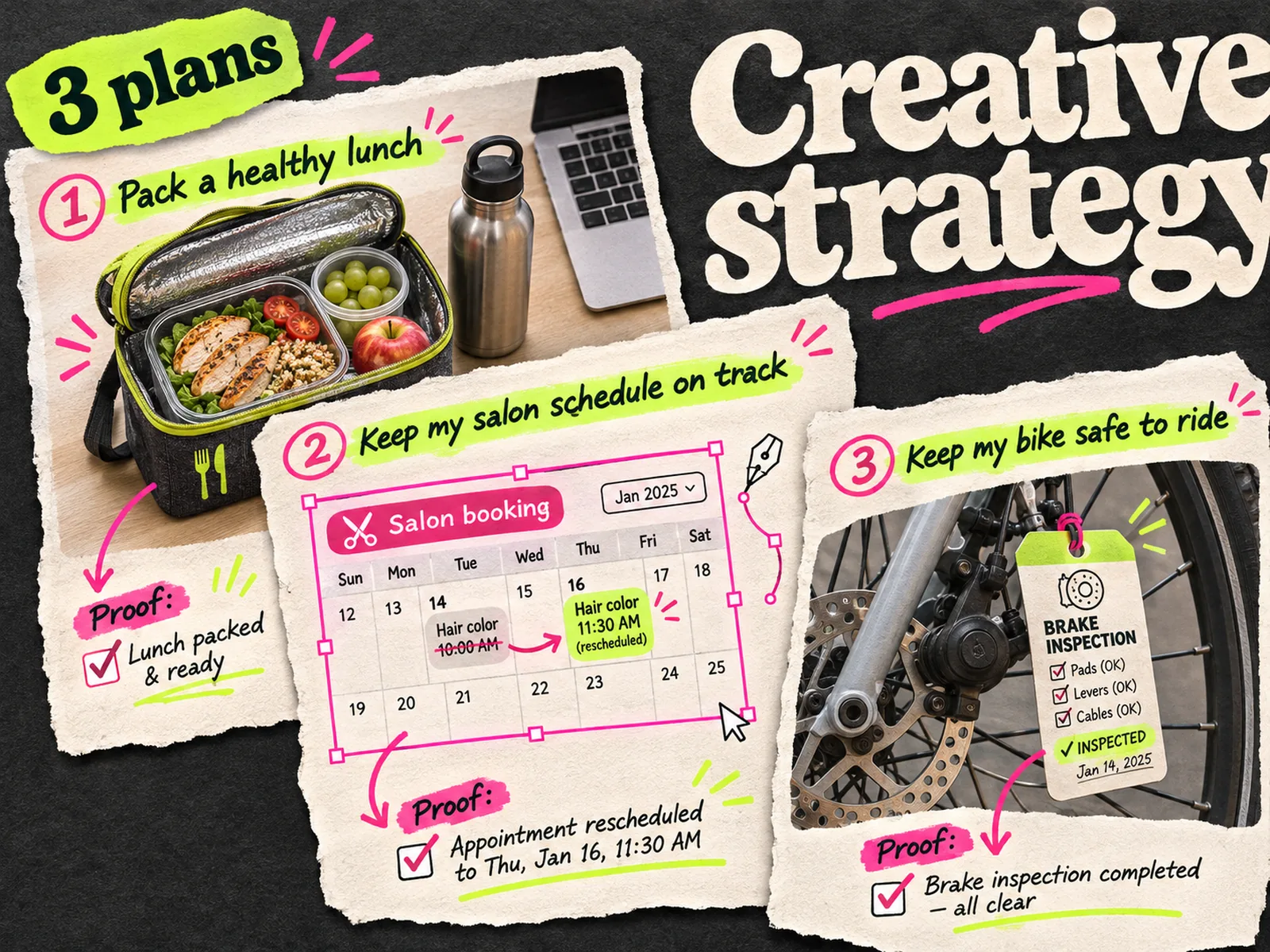
A creative strategy tells the team which argument to make, who needs to hear it, and what would count as evidence that the argument worked. A list of hooks or a moodboard leaves those decisions open.
The three creative strategy examples below are fictional planning exercises. The products, buyer observations, and test ideas illustrate how to make decisions; they are not reports from real campaigns. Replace every assumed customer insight and product claim with evidence from your own business before making an ad.
What belongs in a creative strategy?
Keep the plan short enough to challenge in a meeting. For each campaign, write down:
| Decision | Question to answer |
|---|---|
| Buyer | Who is this for, and what are they trying to do? |
| Evidence | Which customer words, product facts, or account results support the plan? |
| Argument | What should the buyer believe after seeing the ad? |
| Proof | What can the ad show or cite without stretching the truth? |
| Creative territory | What visual situations make the argument easy to understand? |
| Test | What will change, what stays fixed, and what decision follows? |
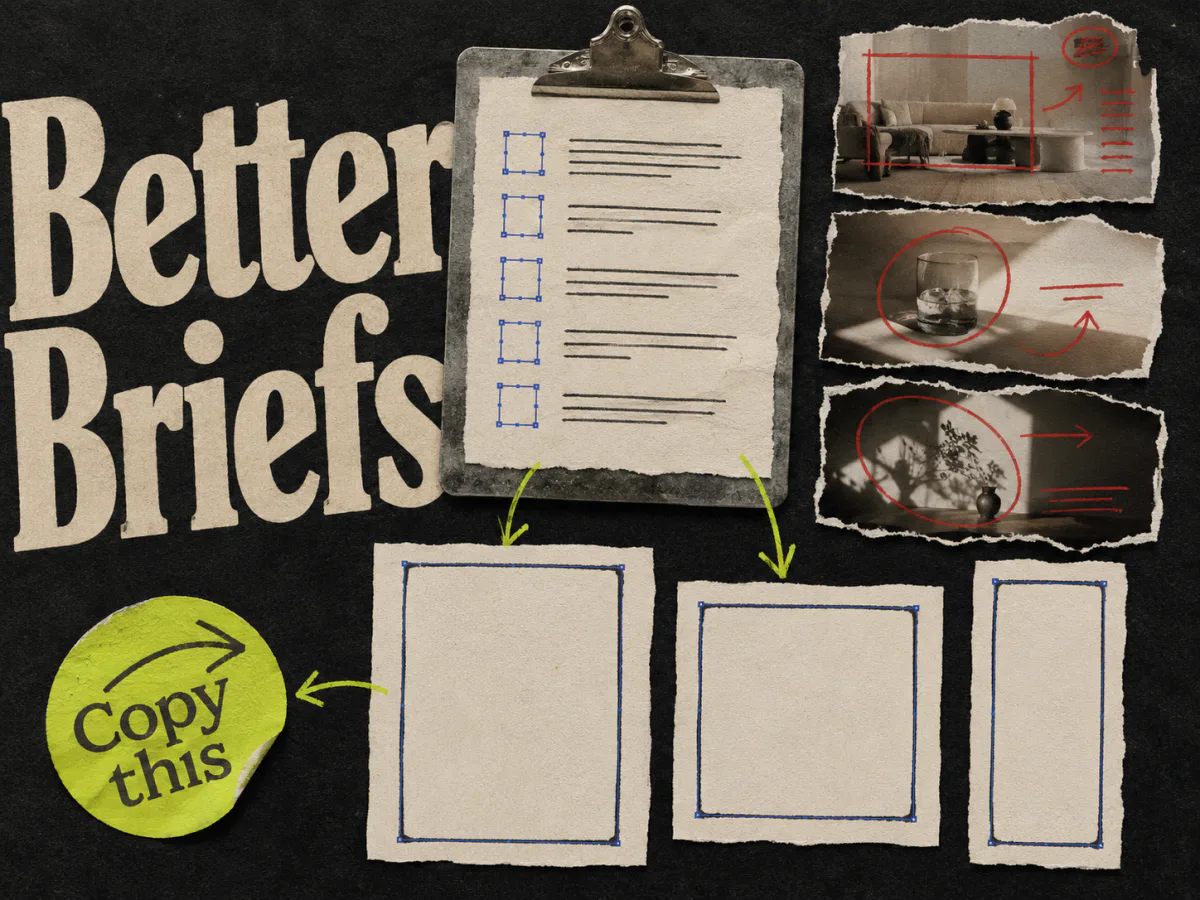
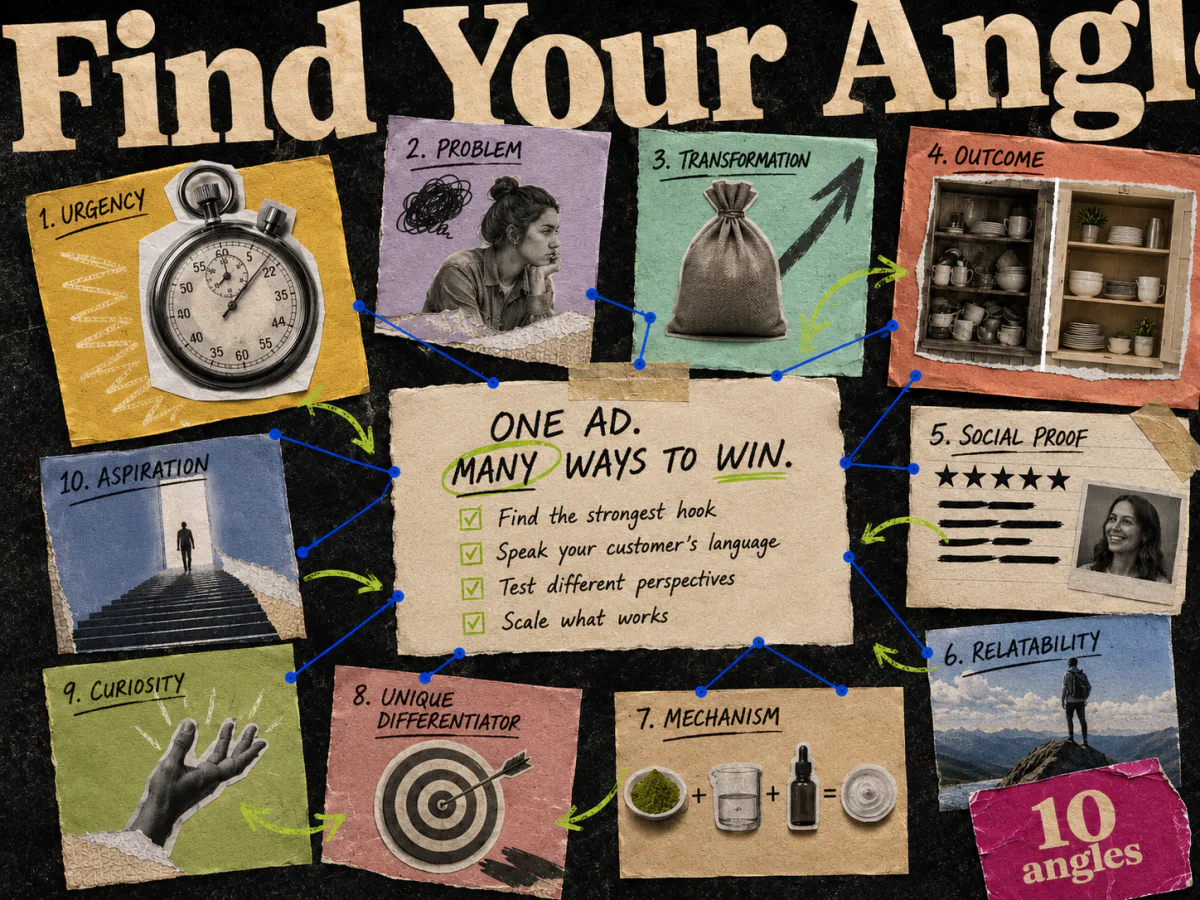
The ad angle examples help you choose the argument. The creative brief template turns one chosen concept into instructions for a maker. A strategy may lead to several briefs, but each brief should still have one clear job.
Example 1: an insulated lunch bag for commuters
Imagine a small brand selling an insulated lunch bag. Its current ads show the product on a blank background. You can see the bag clearly, but you cannot tell why someone would carry it every day.
Start with customer reviews about commuting, photographs of the bag with a real lunch inside, verified dimensions, and any approved statement about the lining. If reviews talk mostly about school lunches, the commuter plan needs to change. Do not write a "keeps food cold all day" claim unless the brand has tested and approved it.
The buyer brings lunch to work and wants it to fit alongside a laptop, keys, and a water bottle.
Strategy statement: show how the bag fits into a crowded commute, where lunch has to travel alongside everything else.
The visual idea is a morning packing sequence. Show the open bag and its contents beside the commuter's other things. Show how it fits inside an actual tote or backpack, using the verified measurements. One version can answer a practical objection: where does the container go, and what happens if it tips?
Use the real bag, a representative lunch container, and approved product details. If the container is sold separately, the ad should not imply it comes in the order. A physically impossible packing shot would make the capacity look larger than it is.
For the first test, compare the everyday-fit argument with a product-detail argument while keeping the offer, destination, and audience as comparable as the campaign setup allows. Label the result as a live ad observation unless the team runs a controlled experiment. A stronger click-through rate alone would not settle which message produces useful purchases.
"Make three lifestyle ads" tells the designer what category of image to make, but not why. The commuter plan says what the buyer needs to see and which product facts must survive the edit.
Example 2: scheduling software for independent salons
Now picture a booking tool aimed at salon owners. "Save time" gives the creative team almost nothing to show. What does an owner do when a client changes an appointment while the owner is with someone else?
Read support conversations and sales calls, then walk through the booking steps the software supports today. A sales transcript can suggest a problem; it cannot prove that most salons have it. A demo cannot support a feature the product has not shipped.
The buyer is an owner who still handles bookings personally and cannot answer messages during every appointment.
Strategy statement: make the interruption visible, then show the actual booking path that lets a client choose an available slot without a long message exchange.
The first frame could show an incoming reschedule message while the owner is working. Follow it with a short screen recording of the actual booking flow. A static version could show the calendar change. The specific interruption matters more than a polished dashboard shot.
Use real interface captures. If reminders or deposits vary by plan or setup, say so in the brief and keep them out of a broad promise. The ad and landing page need to describe the same booking flow.
Test an interruption-led opening against a direct product demonstration. Keep the product promise and landing page steady. Look at qualified trials or booked demos alongside the early attention and click numbers. If the ad gets views but no useful next action, inspect the offer and page before producing more hooks.
This plan stays with one job in the owner's day. It has no need for a "transform your salon" promise.
Example 3: a local bicycle repair shop
For a repair shop, the hard question may be when a rider decides the problem is worth a visit. "Expert repairs" says little to someone with a squealing brake or a flat tire before the weekend.
Ask the shop which repairs people request most often. Check current turnaround, appointment rules, photographs of its own work, and the terms on its booking page. Do not invent a same-day guarantee because it makes a better ad.
The buyer has a specific bike problem and wants to know whether the shop can help and how to book.
Strategy statement: name a recognizable symptom, show the relevant repair, and make booking straightforward. Use the shop's actual address, people, and work. A stock workshop photo says nothing about this shop.
Make one static ad about brake noise and another about a flat repair. A brief mechanic demonstration could show the actual inspection. Each concept addresses a different problem. Within a concept, the team can test two openings without changing the service promise.
Show the shop's own bikes and staff with permission. Price, availability, and turnaround must match the current booking page. If the ad says "book a brake check," the click should lead to a page where the rider can do exactly that.
Keep the brake and flat concepts separate in the creative log. Compare service bookings and the kinds of requests received, not just traffic. If one topic brings calls the shop cannot serve, it is a poor strategy even if the ad is popular.
The useful ad answers a local buyer's immediate question. A large asset catalog can wait.
Turn an example into your own plan
Copy the six decisions from the first table and fill them in for one product or service. Start with the evidence, even if it is thin. If three customers ask whether the lid fits a cup holder, write that down. "Customers want convenience" is too broad to direct an ad.
Next, write a strategy statement that another person could disagree with. The lunch-bag team could decide that spill resistance matters more than commuter fit after reading its reviews. That would be a useful change of mind. Keep the rejected argument and the reason in the project notes so it does not return next month as a "new" idea.
Then choose one concept to brief. Specify the product facts, acceptable proof, visual situation, offer, destination, and the single change you want to test. Use the Meta creative workflow to carry that concept through production and launch. The testing backlog guide helps keep the next question separate from today's asset request.
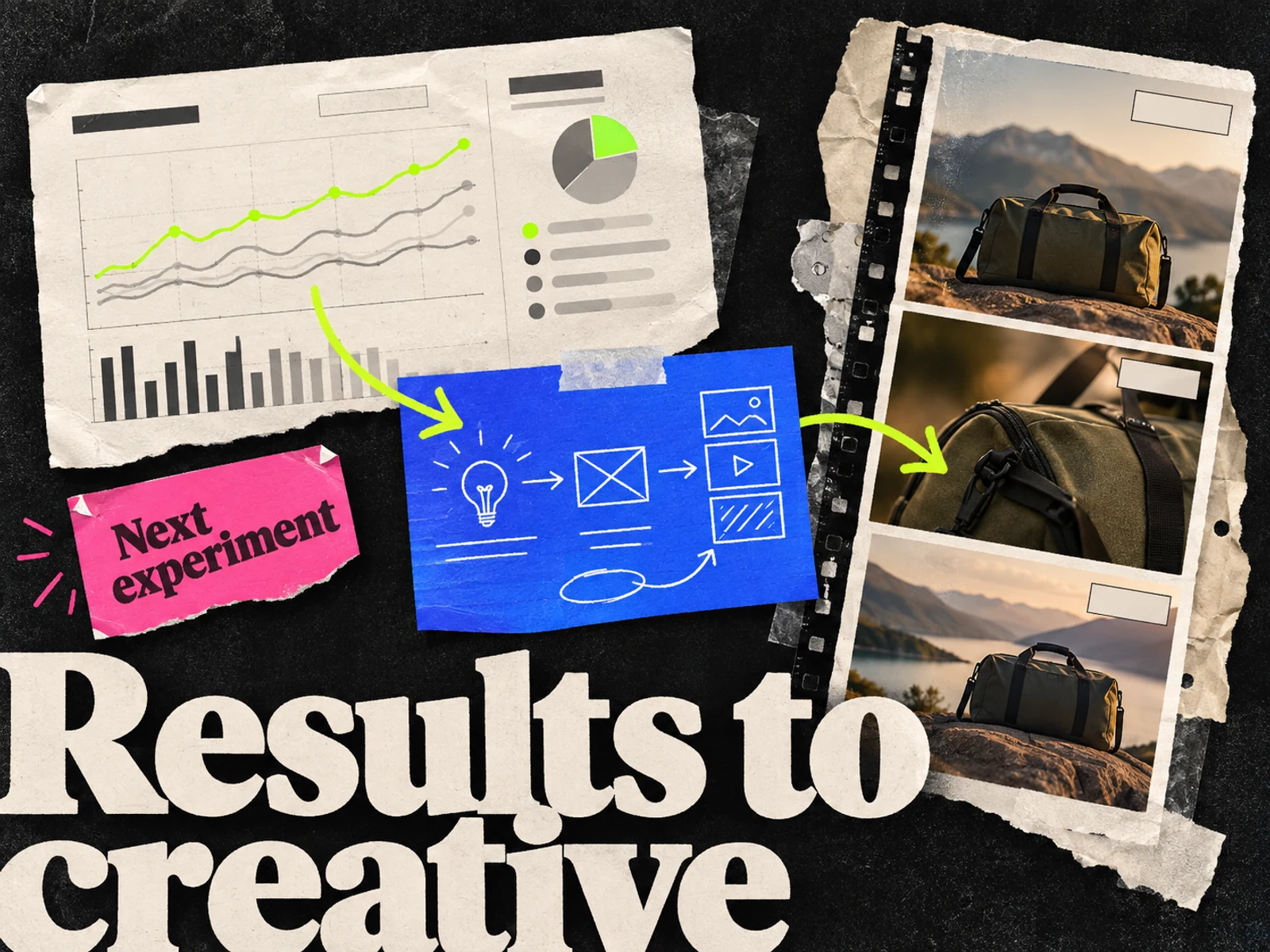
After launch, write down what happened without upgrading an observation into a verdict. Ads may receive uneven delivery, and clicks are only part of the outcome. The performance-to-next-test guide shows how to turn account evidence into a specific follow-up brief.
Where Adrio fits
Adrio can help research ads that are running, keep references, and turn a chosen angle into static or video concepts through Spark. Give it the buyer situation, approved product facts, proof boundary, and test question from your strategy. Review the resulting creative against those inputs before considering a Meta launch.
The team still has to decide what a buyer needs to believe, and whether the available evidence supports it.
Common questions
What is the difference between a creative strategy and a creative brief?
The strategy picks the buyer, argument, evidence, and learning goal. The brief tells a maker how to execute one concept within those boundaries. One strategy can produce several briefs.
Can I use these creative strategy examples as templates?
Yes, use the decision structure. The products and observations are illustrative. Replace them with your own reviews, product facts, customer conversations, and campaign results.
How many creative concepts should a strategy include?
Enough to investigate the argument within your production and test budget. One strategy can begin with a single concept. Adding more concepts does not make the underlying customer evidence stronger.